
Serg Karpow / Unsplash
DATA CENTERS
A Data Center Is Coming. Will Your Town Get a Say?
The deal could be signed before your town hears a word. No one has to ask first.
In Memphis,the deal was finished before the city heard about it. A multibillion-dollar data center for xAI was announced, and only the Chamber of Commerce, the electric company, and the mayor had known it was coming.
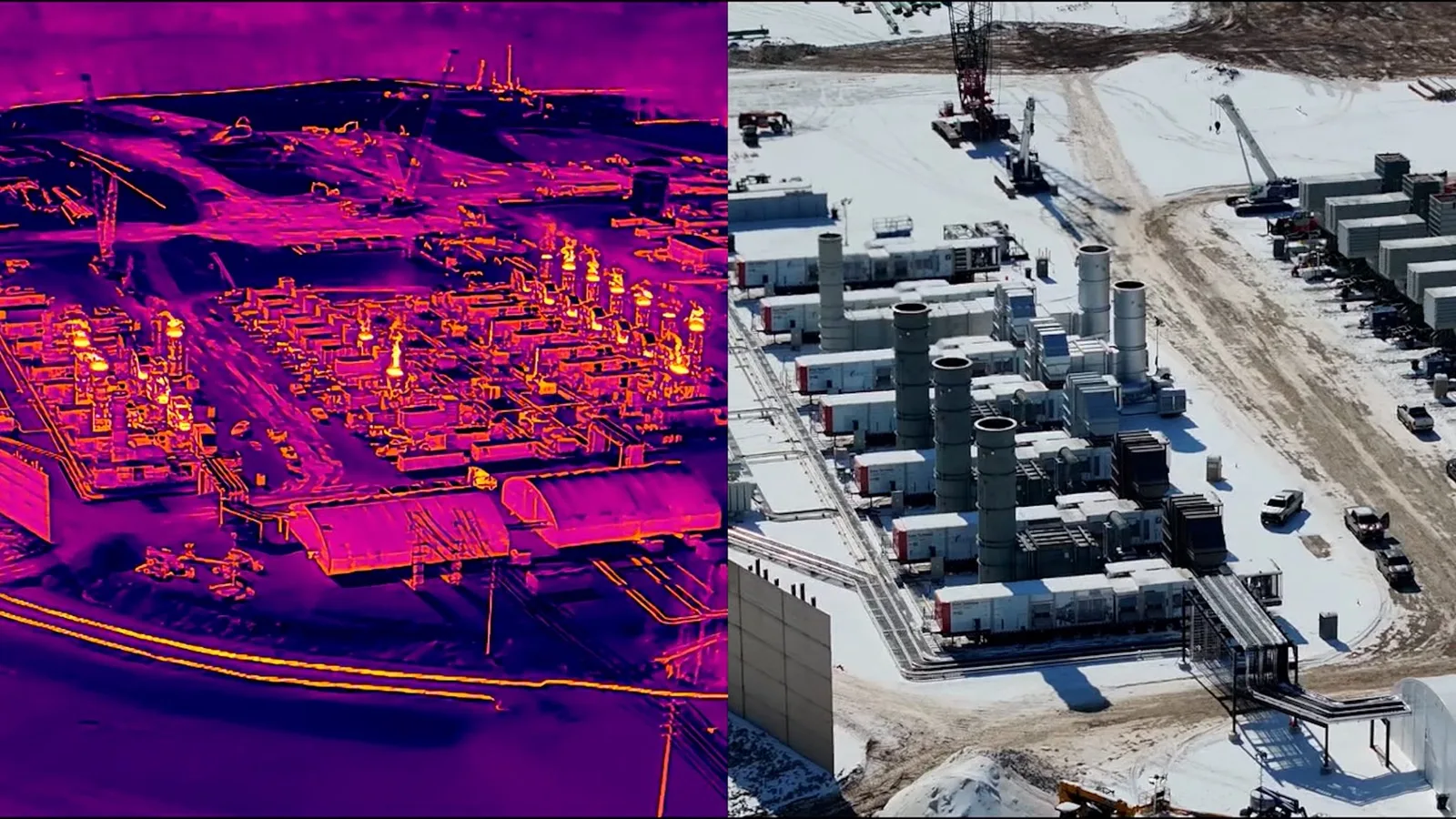
Aerial images later showed dozens of gas turbines running next to neighborhoods already breathing some of the city's dirtiest air. xAI had no air permits for them. It said they were temporary units that didn't need any.
The first real public hearing came ten months in – hundreds packed a high school gym.
“How come I can't breathe at home, and y'all get to breathe at home?” Alexis Humphreys asked through tears, holding her asthma inhaler.123
Our AI Ground Rules Pledge
Sign the AI Ground Rules Pledge
AI should help people, not replace them.
Companies should be accountable for harm.
No one should build AI they can't control.
What's happening
A data center is a warehouse full of computers that train and run AI. They draw enormous power off our grid and need cooling that runs around the clock.
They've been around for decades, but the AI industry is now building new ones (“hyperscalers”) at a furious pace in their race to build AI more capable than humans at economic work. The combined capital spending of Google, Microsoft, Amazon, and Meta has more than doubled in two years – most of it going to AI infrastructure: data centers, chips, and power. That race brings real costs to those who live around the data centers.4
Your Electric Bill
We're footing the bill for their buildout. To feed data centers, utilities build more grid, and every bill-payer helps cover it.
Your Sleep
The hum never stops – and the rules that exist don't make it stop. The fixes exist – setbacks, sound barriers, quieter cooling. Nothing requires them.
Your Air
A data center can change the air around its neighbors' homes – exhaust when its generators run, and heat around the clock.
Your Water
When a data center moves in, its water comes out of the town's supply – and no company has to say how much.
Your Job
Data centers don't deliver the jobs they promise – and the industry says what they're building inside will do many more of our jobs.
Where are the rules?
These deals get made in private – a 2025 national investigation of more than 30 data center deals across 14 states found local officials had signed secrecy agreements in most of them.50
- In Pine Island, Minnesota, city staff signed nondisclosure agreements, and residents were kept in the dark for two years.1415
- In Port Washington, Wisconsin, residents learned a $15 billion data center was coming only after the deal was made.16
- In Saline Township, Michigan, the planning commission voted no to an OpenAI and Oracle data center – and the township board voted no. Construction started weeks later anyway.1718
- And when pressure came in Memphis, xAI put its next data center just across the state line in Mississippi – and ran gas turbines there without air permits too.19
Amazon, Microsoft, Google, Meta, and xAI were all asked about their use of secrecy agreements with local officials. Not one of them would say.50
Almost all of that is perfectly legal. That's the point. Nobody wrote rules for this – towns are zoning a power plant like it's a warehouse.
YOUR RESTAURANT
a health permit before it opens
A FACTORY
an environmental review before it's built
xAI IN MEMPHIS
dozens of gas turbines, no air permits, next to neighborhoods breathing some of the city's dirtiest air
It's bigger than a data center
The company being sued for running gas turbines next to our neighborhoods without air permits wants us to trust it with what it's building inside the data center.22
Why the frenzy to build more data centers? They're not building a better chatbot. Their word for what they're racing to build? Superintelligence.
Inside the data centers, they are training a powerful AI meant to outthink and outsmart humans. That's their own stated goal – OpenAI's founding charter defines what they're chasing as “highly autonomous systems that outperform humans at most economically valuable work.” They also admit they don't fully understand how their own technology works.5123
They're building it anyway – and just like with your town, they're not asking.
If our town doesn't get a vote on the building, who gets a vote on what runs inside it?
The bigger picture
Keep humans in control
What we can do
Towns are already writing the rules nobody wrote for them.
- Chandler, Arizona rewrote its zoning after years of complaints.27
- In Virginia, neighbors complained for years, and a state audit confirmed the problem. The state has now ordered its environmental agency to write its first data center noise standard, with fines up to $32,500 a day once it takes effect in 2030.28
- In Nottingham, New Hampshire, an online petition against a proposed data center passed 20,000 signatures in a week. Hours before the planning board met, the applicant withdrew – for now.29
When we organize, we can win. But we need to do so everywhere, so that the company doesn't just build data centers – and AI it admits it can't control – somewhere else.3031
More than 800 community groups across 49 states are organized on this now. Towns can set the rules for the buildings. And the AI inside – AI the companies admit they can't fully control – needs commonsense national rules. See the standards we're asking for.32
Questions people ask
We're not telling towns to stop or to build – that's their call. Local communities have a right to ask questions and a duty to call for transparency and accountability from these companies. They're worried about job losses, human connection, and national security. They're also worried about what data centers require from their town. Communities are hitting pause because nobody wrote rules for this. We support people telling companies they don't get to build recklessly without anyone getting a vote.
It depends on where it is and how it's cooled. A large one can use up to 5 million gallons a day – about what a town of 50,000 people uses.49
Nobody can give you a tighter answer than that, because no company has to publish one. Where the number has been forced out, it has been big: more than a quarter of all the water used in The Dalles, Oregon, and about a tenth of the water used around Meta's data center in Newton County, Georgia.1242
No – and the researcher whose work the number came from says so too. It traces to a 2024 news estimate built on an energy assumption about 35 times larger than his own published one, and he has since walked it back publicly; his current figure is closer to a tablespoon.48
That's how these numbers get made. With no requirement to disclose, worst-case guesses fill the gap. The real fight isn't the national total. It's that a company can take a quarter of one town's water and then bankroll that town's lawsuit to keep a newspaper from telling anyone.
A little, and it has now been measured. Researchers drove temperature sensors upwind and downwind of Phoenix-area data centers and found the downwind side about 1.5°F warmer, up to 4°F at the hottest spots, out to roughly a third of a mile.41
You may have seen headlines saying data centers heat the land 16 degrees for six miles around. That study hasn't been peer reviewed, it measured how hot the ground looks from a satellite rather than the air people breathe, and most of what it found is probably what happens any time you pave a hundred acres. The measured number is much smaller.47
Globally, they use about 1.5% of the world's electricity – a real and growing share, and smaller than you may have heard. The serious harms are local: diesel generators and gas turbines polluting the air next door, a hum that never stops, water drawn from a dry basin, and higher electric bills. Those harms land on specific towns – usually towns that never got a say.33
Yes, in places with a lot of them. Utilities build more grid and pass the cost to everyone who pays a bill – but a high-voltage line takes six or seven years and a data center takes two, so the charges show up long before the wire does.37
Virginia's new rate class, which makes customers drawing 25 megawatts or more cover more of what they cost, doesn't start until 2027.35
And Virginia's own legislative auditors project data center growth could add $14 to $37 a month to a household bill by 2040 under current rules.40
They're real – measured, documented, and now in court. Cooling equipment and generators run around the clock, and neighbors describe it as worst at night, when there's no traffic left to cover it and still air carries the sound farther. Much of the complaint is a low hum that standard meters barely register, which is how a facility can be “within the limit” and still keep a neighborhood awake.7
According to Heatmap Pro, which surveys every county in the country, noise is now the top reason data center projects get cancelled, and about a third of data center fights involve it.46
Fixes exist – setbacks, sound barriers, quieter cooling. Companies skip them when no one requires them.
Fewer than the sales pitch says. Construction jobs are real, well paid, and temporary – often gone in under a year, while the tax break runs a decade or more.
A review of more than 1,200 US data centers by the World Resources Institute found that even the largest employ fewer than 150 permanent workers, and some as few as 25.21
Virginia's own legislative auditors put a typical facility at about 50 full-time workers, roughly half of them contractors.40
Illinois has paid about $1.4 million in subsidy for each data center job it bought. Good Jobs First says the defensible cap is $50,000.45
More than 3,000 operate in the US today, and more than 1,500 are in development.13
At the end of 2025, in the eight biggest US markets, capacity under construction was nearly two-thirds of everything already running there – even after construction starts slowed for the first time in five years.34
And the map is changing: 67% of planned data centers are headed to rural counties, against 13% of the ones already built.13
The four biggest tech companies plan to spend over $600 billion this year, most of it on AI infrastructure.4
Towns do it. An online petition against a Nottingham, New Hampshire data center passed 20,000 signatures, and the applicant withdrew hours before the planning board met.29
Indianapolis residents organized for months and Google pulled out before the vote. Chandler, Arizona rewrote its zoning code.27
What none of them got was a fair fight from the start – companies negotiate in private and announce when it's done, and a town that says no can be sued for it. That's why we're asking for a real say up front, not a court fight after the fact.
More resources
These are independent resources – not from us. Each one is worth your time.
Southern Environmental Law Center: Data Centers – Legal reporting on data center power demand, water use, and community wins.
World Resources Institute: Data Center Impacts – Research on how data centers reshape local grids, water, and land – and the tools towns can use.
Americans for Responsible Innovation: Data Center Playbook – A community guide to engaging on data center development – for residents, local officials, and organizers.
Sources51 references · tap to expand
Check everything – every number on this page comes from somewhere you can read.
- 1 ↩Prism Reports · Memphis secret deal; three entities knew · April 2, 2025
- 2 ↩Daily Memphian + CNN · Fairley High hearing; residents' inhalers · April–May 2025
- 3 ↩ProPublica / MLK50 · Boxtown pre-existing pollution burden · 2025
- 4 ↩Platformonomics (SEC-derived); CNBC / Fortune · Big Tech capex 2019–2026 · February 2026
- 5 ↩LBNL / DOE · Data centers ~5% of US electricity (2024); roughly 12% by 2030 · June 2026
- 6 ↩Inside Climate News · Virginia rate order; Piedmont Environmental Council finds 61% of grid-upgrade costs still on ratepayers · January 7, 2026
- 7 ↩EESI · Data-center noise: 24/7 presence, low-frequency content, health effects · 2024–2026
- 8 ↩WPR; FOX6 Milwaukee; Microsoft community updates · Microsoft acknowledges 'tonal humming sound' at Fairwater, Mount Pleasant WI while asserting compliance; fan adjustments, sound-reduction components, June resolution claim, more components still installing as of July; class action filed E.D. Wis., July 2026 · April 15, June 18 and July 20, 2026
- 9 ↩VCU L. Douglas Wilder School · NoVA data-center generator air pollution more than doubled, 2015-2023 · 2026
- 10 ↩USGS Professional Paper 1894-D · US farm/irrigation consumptive use (national baseline), 2010–20 · 2026
- 11 ↩Bloomberg News (WRI / DC Byte data) · ~2 in 3 US data centers built or in development since 2022 are in areas of high water stress, measured at watershed level on the WRI Aqueduct index; data through Q1 2025 · May 8, 2025
- 12 ↩Data Center Dynamics; Reporters Committee for Freedom of the Press · The Dalles, OR: the City filed a reverse public-records suit against Mike Rogoway and The Oregonian in Nov. 2021 after the Wasco County DA ordered release; Google funded the city's litigation (~$153,000) and reimbursed the paper's $53,173 in fees; city dropped the suit December 2022; records showed Google's data centers using more than a quarter of the city's water · December 2022
- 13 ↩Data Center Map, via Pew Research Center · 3,000+ operating; 1,500+ in development; 67% of planned facilities in rural counties vs 13% existing · April 2026
- 14 ↩KAAL / ABC 6 News · Pine Island, MN: city staff signed NDAs; residents kept unaware · March 13, 2026
- 15 ↩MN House Session Daily · Pine Island, MN: officials and developer knew 2+ years before residents · March 11, 2026
- 16 ↩Wisconsin Public Radio; Ozaukee Press · Port Washington: three residents removed and issued municipal disorderly-conduct/obstruction tickets at the December 2 Common Council meeting, none jailed; recall petition against Mayor Ted Neitzke filed on deadline and found several hundred signatures short, February 16, 2026 · February 17, 2026
- 17 ↩Fortune; Planet Detroit · Saline Township: board rejected rezoning; Related Digital and the landowners sued on an exclusionary-zoning theory; October 2025 consent judgment rezones to I-1 and imposes a 55 dB limit at all property lines, no water cooling, $4M farmland preservation trust, $2M community fund, $8M fire services, decommissioning fund · May 6, 2026
- 18 ↩Detroit News · Saline Township: judge denies bid to slow construction · February 20, 2026
- 19 ↩Earthjustice; NAACP v. X.AI Corp. · NAACP alleges xAI is operating gas turbines at Southaven without required Clean Air Act permits; no merits ruling to date; Mississippi DEQ's stated position is that portable/temporary trailer-mounted turbines are exempt from state air permitting, a reading SELC contests · No. 3:26-cv-00074 (N.D. Miss., filed April 14, 2026)
- 20 ↩Gallup · 71% oppose local AI data center; 53% oppose a nearby nuclear plant · March 2026
- 21 ↩World Resources Institute · Review of 1,200+ facilities: fewer than 150 permanent jobs, some as few as 25 · February 2026
- 22 ↩E&E News (POLITICO); CNN; SELC · xAI Memphis: 35 gas turbines, no permits · May 1, 2025
- 23 ↩Dario Amodei, “The Urgency of Interpretability” · Amodei: we don’t understand how our own AI works · April 24, 2025
- 24 ↩CBS News, 60 Minutes · Pichai: AI is a “black box” we don’t fully understand · April 16, 2023
- 25 ↩CNBC (Musk at SXSW) · Musk: AI more dangerous than nuclear warheads · March 13, 2018
- 26 ↩Business Insider; Future of Life Institute · Altman: AI may “lead to the end of the world” · June 2015
- 27 ↩City of Chandler · Chandler data-center zoning ordinance · December 2022
- 28 ↩Virginia Mercury; Virginia HB30 Conference Report item 367#2c · The 2026 budget directs DEQ to adopt data center noise regulations effective no later than December 31, 2029, based on DEQ's determination of the lowest achievable noise; on or after January 1, 2030 a violating data center is subject to a civil penalty of up to $32,500 per day · June 30, 2026
- 29 ↩NHPR; New Hampshire Bulletin · Nottingham, NH: Change.org petition open nationally topped 20,000 signatures in a week; local businessman Tom Moulton's preliminary conceptual consultation request for a vacant ~200,000 sq ft building withdrawn without prejudice hours before the May 27, 2026 planning board meeting · May 27, 2026
- 30 ↩New Hampshire Bulletin · Nottingham, NH: opposition context across surrounding towns · May 29, 2026
- 31 ↩NBC Boston · Nottingham, NH: community opposition, developer withdrawal · May 28, 2026
- 32 ↩NBC News · Opposition groups doubled, 49 states · June 17, 2026
- 33 ↩International Energy Agency · Data centers ≈1.5% of global electricity · 2026
- 34 ↩CBRE · 5,994 MW under construction vs 9,432 MW existing, 8 primary US markets; construction starts declined for the first time since 2020, from 6,350 MW · February 2026
- 35 ↩Virginia State Corporation Commission · A $565.7M general base-rate increase producing an $11.24/month residential increase for 2026 (a base-rate case, not attributed by the Commission to data centers); new GS-5 rate class for customers demanding 25 MW or more, effective January 1, 2027 · November 25, 2025
- 36 ↩Monitoring Analytics (PJM's independent market monitor) · Including forecast rather than only operating data-center load raised the 2027/28 capacity auction's total cost by about $6.2B; the money is paid by load-serving entities to generators for capacity commitments · January 5, 2026
- 37 ↩Grid Strategies / Americans for a Clean Energy Grid · 888 miles of 345 kV+ transmission completed in the US in 2024; Grid Strategies derives a roughly 5,000-miles-a-year requirement from the most conservative scenario in DOE's 2024 National Transmission Planning Study, which calls for the contiguous system to expand to 2.1–2.6x its 2020 size by 2050 (the 5,000 figure is the analysts' derivation, not a DOE statement) · July 21, 2025
- 38 ↩CBS Philadelphia; NBC10 Philadelphia · Cumberland County Dept. of Health notice of violation for nighttime noise, Vineland NJ · March 10, 2026
- 39 ↩The Hill; Mississippi Free Press · Haley v. X.AI Corp. (N.D. Miss., filed June 9, 2026): proposed class of more than 10,000 residents near the gas-turbine plant powering xAI's Colossus 2 in Southaven, MS · June 9, 2026
- 40 ↩Virginia JLARC, Report 598 · About one-third of operational data center properties within 200 feet of residentially zoned property (Fairfax 55%); noise characterized as an issue for a minority of data center neighborhoods, varying with cooling technology and site layout; typical facility ~50 full-time workers, about half contractors; projected $14–$37/month added to a typical household bill by 2040 under current rules · December 9, 2024
- 41 ↩Sailor, D.J. et al., Journal of Engineering for Sustainable Buildings and Cities · Downwind neighborhoods 0.7–0.9°C (1.3–1.6°F) warmer, peaks to 2.2°C (4°F), detectable to ~500m; the 40,000-homes waste-heat comparison is lead author David Sailor's, quoted in Arizona State University's May 2026 news release on the study · May 2026
- 42 ↩Lincoln Institute of Land Policy, "Data Drain" (reporting a New York Times investigation) · Meta's Newton County, Georgia data center uses about 500,000 gallons a day, roughly 10% of the water used in the surrounding community · 2026
- 43 ↩US EPA WaterSense · Household leaks waste ~1 trillion gallons nationwide per year · 2026
- 44 ↩LBNL, "2024 United States Data Center Energy Usage Report" (LBNL-2001637) · A bottom-up modeled estimate built from equipment shipment data: US data centers directly consumed 66 billion liters (17.4 billion gallons) of water for cooling in 2023, excluding indirect power-generation water · December 2024
- 45 ↩Good Jobs First · Illinois has granted about $1.4 million in state and local subsidy per data center job ("Cloudy Data, Costly Deals: How Poorly States Disclose Data Center Subsidies," November 2025); 16 of 36 state data center subsidy programs impose no job-creation requirement, and most of those that do set the threshold at 50 jobs or fewer; Good Jobs First's recommended cap is $50,000 per permanent job ("Money Lost to the Cloud," October 2016) · November 2025
- 46 ↩Heatmap News (Jael Holzman) · Citing Heatmap Pro's recurring survey of all 3,100+ US counties (proprietary and paywalled; the "#1 reason" finding is among cancelled projects specifically) · April 24, 2026
- 47 ↩Marinoni et al., arXiv preprint · Viral '16 degrees for six miles' heat claim — not peer reviewed, measures land not air · 2026
- 48 ↩Shaolei Ren, revised per-prompt water estimate · Walks back the 'bottle of water per prompt' figure; current estimate ~15 mL · 2026
- 49 ↩EESI; Brookings Institution · A large data center can use up to 5 million gallons/day, ~a town of 50,000 · November 20, 2025
- 50 ↩NBC News · NBC review of 30+ data center proposals across 14 states: officials signed NDAs in a majority; Amazon/Microsoft/Google/Meta/xAI declined to comment · October 28, 2025
- 51 ↩OpenAI Charter · OpenAI charter: AGI = highly autonomous systems that outperform humans at most economically valuable work · 2018
Ready to demand commonsense rules for AI?
See what we're asking for →